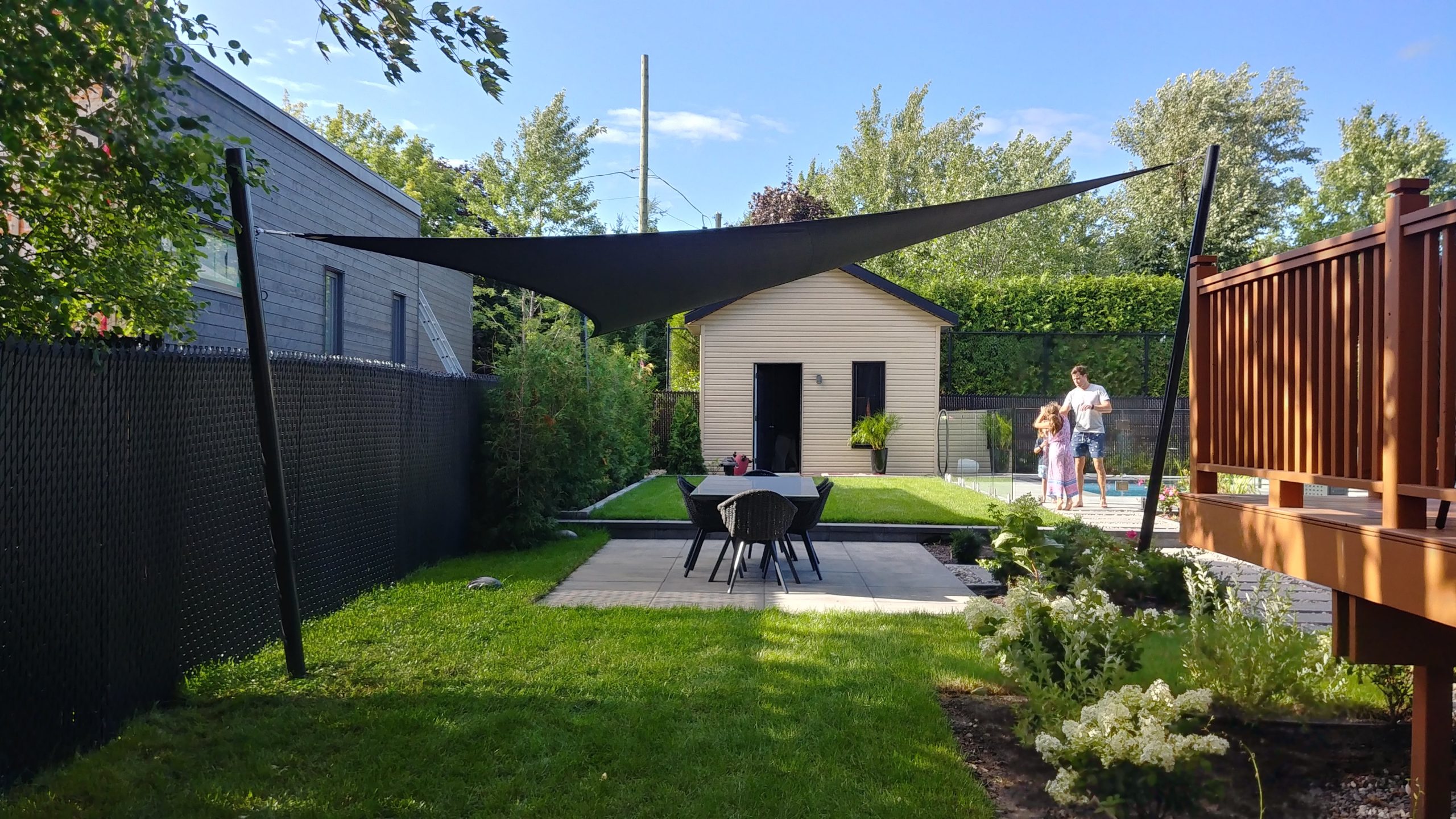
The patio furniture is stacked in the garage and the first frost is on the way. For most Ontario homeowners, that’s the moment outdoor projects drop off the radar until the snow melts. But if you spent this summer wishing your deck had real shade, now is exactly the right time to plan your shade sail.
A custom shade sail isn’t something you pick off a shelf in May. It’s designed around your yard, your anchor points and the way the sun moves across your space. When you plan your shade sail over the winter, it’s ready to go up when the season starts, not halfway through July.
Why the Off-Season Is the Best Time to Plan Your Shade Sail
When the first warm weekend of spring arrives, everyone remembers their backyard at the same time. Landscapers, deck builders and shade specialists all see their calendars fill up quickly. Homeowners who start planning in April often find themselves waiting while the best part of the season goes by.
When you plan your shade sail over the winter, that flips around. You have time to think through the design without rushing, compare fabric colours, and ask every question you have. By the time the ground thaws, the decisions are made and your project is ready to move.
There’s also a practical reason. A properly installed shade sail puts a lot of tension on its anchor points, which is why posts need solid, deep footings. That kind of groundwork depends on the weather, so having your design settled before spring helps your installation happen as early in the season as conditions allow.
Write Down What You Learned This Summer, Before You Forget
The most useful information to plan your shade sail is already in your head. You just spent a whole season living with that sun-baked patio. Before those details fade, jot down a few notes:
- When the space gets too hot. Was it the late-afternoon sun that drove everyone inside, or the midday glare over the pool?
- Where the shade needs to land. Over the dining table? The kids’ play area? The hot tub? Be specific about what you actually want covered.
- Which direction the sun came from. A west-facing deck needs a very different sail angle than a south-facing one. Your design can account for this, but only if we know where the problem is.
- Wind patterns. Our sails are built to handle winds up to 100 km/h when properly installed and tensioned, but knowing where the wind usually comes from helps with positioning.
- Photos. If you have pictures of your yard from summer, save them. They show where the shadows fell far better than a snowy yard will in January.
Also take stock of your possible anchor points. A sail can attach to a solid house wall, existing structures or dedicated steel posts. Fences and most wooden posts generally aren’t strong enough on their own, so it helps to know early whether your design will need new posts. Our installation services page covers the common questions about anchors and posts.
If you’re still weighing shape, size and fabric, our guide on how to choose the right shade sail for your Ontario backyard is a good place to start.
Plan Around Your Part of Ontario
Ontario’s weather isn’t the same from Windsor to Thunder Bay, and where you live should shape how you plan your shade sail, from design to timeline.
- Lakeshore and Georgian Bay properties. Homes near the Great Lakes often deal with steadier, stronger winds coming off the water. That makes solid anchors, proper tension and smart positioning even more important. Our sails handle winds up to 100 km/h when installed correctly, but on an exposed waterfront lot, it pays to plan the sail’s angle around the wind.
- Snowbelt communities. The eastern and southern shores of Lake Huron and Georgian Bay, from Parry Sound down to London, sit in Ontario’s snowbelt, along with the eastern shore of Lake Superior and parts of the Niagara and Lake Ontario shoreline. Lake-effect squalls can dump heavy snow there as early as November, so sails in these areas often need to come down earlier in the fall. It’s worth planning your removal date from day one.
- Eastern and Northern Ontario. In places like Ottawa, Sudbury and Thunder Bay, longer, colder winters mean the ground stays frozen later into spring. Because posts need deep, solid footings, installations here tend to happen later in the season, which makes getting on the schedule early even more valuable.
- Southwestern Ontario and the GTA. Milder springs often mean an earlier start to the installation season, and long, hot summers mean afternoon heat is usually the problem to solve. If your yard bakes from 3 p.m. onward, make sure your design covers the west side.
Sort Out the Paperwork While It’s Quiet
Winter is also a good time to get the administrative side out of the way, so nothing holds up your project once spring arrives.
Check with your municipality. Rules for outdoor structures vary from city to city across Ontario. Some homeowners need nothing more than a design and a booking, while others may need to check setbacks or permit requirements. If you live in a community with an HOA or condo board, check whether they need to approve the project too. It’s much easier to make a few phone calls in January than to discover a requirement in May.
Think about extras now. If you’d like your sail to work after sunset too, sail lighting is much simpler to plan into the design from the start than to add later. The same goes for custom structures if your yard doesn’t have the anchor points you need.
A Simple Winter Planning Timeline
You don’t need to do everything at once. Here’s an easy way to plan your shade sail over the winter months:
- Late fall (now): Write down your summer notes, gather photos, and take a few measurements of the space before snow covers it.
- December to January: Reach out for a free consultation. Talk through shape, size, colour and anchor points, and get your questions answered.
- February to March: Finalize your design and fabric, check any municipal or HOA requirements, and lock in your spot on the installation schedule.
- Spring: Once the ground and weather cooperate, your sail goes up, ready for the first hot weekend of the year.
If you already own a shade sail, remember that it should come down before the first snow. Sails are built to handle wind, not snow load. Our seasonal shade sail guide explains how we handle de-installation in the fall and re-installation in the spring.
Plan Your Shade Sail Today
The best summers outside start long before summer does. If you spent this year squinting across a sun-baked deck, take what you learned and plan your shade sail now, while it’s fresh and the schedule is open.
Contact Shade Sails Ontario for a free consultation and quote. We’ll help you plan your shade sail and design a custom onethat’s ready to go up as soon as spring arrives.
Sources
- Ontario One Call: Homeowners, public utility locates (5 business days’ notice, free, required by law)
- Shade Sails Ontario: Installation services FAQ (100 km/h wind rating, anchor and post guidance)
- Wikipedia: Snowbelt (Ontario snowbelt areas: Lake Huron and Georgian Bay shores from Parry Sound to London, eastern Lake Superior, Niagara and northeastern Lake Ontario)
- Instant Weather Ontario: November 2025 snowbelt squalls (example of heavy squalls in early November)